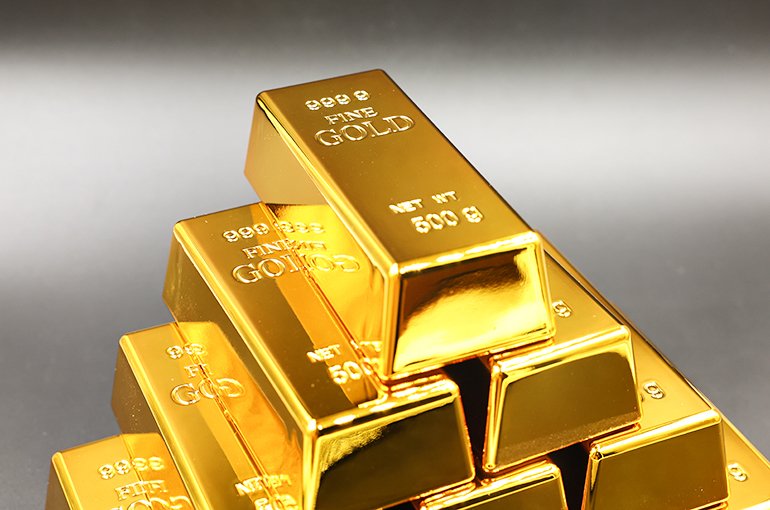
After its best year since the 1970s, gold continues its historic climb as geopolitical chaos and central bank buying fuel an unprecedented rally
Gold has shattered records again.
The precious metal surged to an all-time high of $4,967 per ounce on January 23, capping a week that saw prices climb nearly 11%—the strongest weekly performance since the pandemic panic of March 2020. As of Friday morning, gold traded near $4,941, up a staggering 80% from the same time last year.
The latest surge was ignited by President Donald Trump’s escalating threats over Greenland, which saw him threaten tariffs on eight European NATO allies unless they supported U.S. acquisition of the Danish territory. Though Trump backed off those threats mid-week after announcing a vague “framework” deal with NATO Secretary General Mark Rutte, the damage to market confidence was already done.
“Gold may be pausing, but the bull market is very much intact,” said Ewa Manthey, commodities strategist at ING. “With uncertainty still elevated, investors are likely to view any dip as a buying opportunity rather than a turning point.”
The $6,000 Question
Wall Street is now racing to revise its forecasts upward.
Bank of America made waves this week with a bold prediction: gold could hit $6,000 per ounce by spring 2026. The bank’s analysts cite persistent central bank demand, continued dollar weakness, and what they call an enduring “debasement trade”—investor flight to hard assets amid concerns about currency dilution.
Deutsche Bank has set a 2027 target of $5,150, with analysts expecting prices to fluctuate between $3,950 and $4,950 throughout 2026. Goldman Sachs raised its December 2026 forecast to $4,900 back in October, a target that now looks conservative given recent price action.
UBS, meanwhile, predicted gold would breach $5,000 in the first quarter of 2026—a milestone that now appears imminent.
What’s Driving the Rally
The forces behind gold’s ascent are converging from multiple directions.
Central bank buying has been relentless. Countries from China to Poland have been stockpiling bullion as a hedge against dollar dominance and geopolitical uncertainty. This institutional demand has provided a floor under prices even during brief pullbacks.
Safe-haven demand has intensified as investors grapple with an unpredictable policy environment. The Greenland episode, threats to Federal Reserve independence, and simmering trade tensions have all pushed capital toward gold’s perceived stability.
Monetary policy continues to favor gold. With the Federal Reserve expected to cut rates twice more this year, non-yielding assets like gold become more attractive compared to bonds and savings accounts.
The weakening dollar has also boosted gold’s appeal. When the greenback falls, gold becomes cheaper for foreign buyers, driving up global demand.
European investors have taken notice. According to HANetf, they’ve poured over $6.5 billion into gold exchange-traded commodities this year alone, reversing the outflows seen in 2024.
After a Historic 2025
Last year will go down as one of gold’s greatest. Prices rose 64.5% over 2025—the best annual performance in roughly five decades.
“It’s been the best year since the 1970s, with minor dips, but still reaching colossal new highs and breaking records that none of us expected,” said Rick Kanda, managing director at The Gold Bullion Company.
The rally was fueled by a perfect storm: tariff uncertainty, fears of an AI bubble bursting, and a global flight to safety as geopolitical tensions mounted. Those same forces show no signs of abating.
The Risks Ahead
Not everyone is bullish without reservation.
Some analysts warn that gold’s momentum indicators are flashing overbought signals typical of late-cycle rallies. Positioning has become stretched, and sentiment is increasingly one-sided.
If macro risks fade or the Federal Reserve turns more hawkish than expected, the elevated prices could face a sharp correction. Gold has historically struggled during periods of strong economic growth and rising real interest rates.
Yet for now, the path of least resistance appears higher.
How to Invest
For those looking to add gold exposure, several approaches exist.
ETFs and ETCs offer the simplest route, tracking gold prices without the hassle of physical storage. Gold miners have outperformed this year, returning nearly three times the gains of physical gold, according to HANetf—though they carry additional company-specific risks.
Physical gold—bars or coins—remains an option for those who prefer tangible assets. U.S.-minted coins can offer some protection against counterfeits.
Investment advisors typically suggest a 5-10% portfolio allocation to gold, treating it as insurance against market turmoil rather than a primary growth engine.
As Susannah Streeter, chief investment strategist at Wealth Club, put it: “The precious metal is holding even more allure as a safe haven as worries spread about the repercussions of aggressive trade and geopolitical policies.”
With uncertainty the only certainty, gold’s glitter shows no signs of dimming.
Prices current as of January 24, 2026. This article is for informational purposes only and does not constitute investment advice.
