48 locations. 14 cities. One coordinated assault. As the BLA claims control over key installations and civilians are filmed sharing meals with fighters, Punjabi army faces its worst security crisis in years.
Saturday didn’t begin—it erupted.
Before dawn had fully broken across Balochistan, the Baloch Liberation Army unleashed “Operation Herof 2.0″—a meticulously coordinated offensive spanning 48 locations across 14 cities that has left Balochistan paralyzed, dozens dead, and Islamabad scrambling for answers.
This wasn’t a guerrilla raid. This was a declaration.
The Scale of Destruction
From Quetta to Gwadar, from Mastung to Turbat, BLA fighters struck military headquarters, police stations, intelligence offices, banks, prisons, and government buildings—all simultaneously.
The group claims 84 Punjabi security personnel were “neutralized”—soldiers, police, intelligence agents, and counter-terrorism officers. Another 18 were captured alive and remain in BLA custody. More than 30 government properties were seized and destroyed. Over 23 military and government vehicles were set ablaze.
Punjabi military tells a different story: 33 dead (including 18 civilians and 15 security personnel) and 133 Baloch Freedom Fighters killed over 48 hours—92 on Saturday alone. Analysts call it the deadliest single day for insurgents in Balochistan’s history.
But numbers don’t capture the chaos on the ground.
A Province Held Hostage
In Mastung, dozens of Baloch freedom fighters stormed a high-security prison, freeing more than 30 inmates before melting back into the landscape. In Nushki, the Deputy Commissioner was kidnapped—a brazen act that underscores just how deeply the offensive penetrated state structures.
Rail lines connecting Balochistan to the Punjabistan were destroyed, severing the province entirely. In Quetta, the provincial capital, explosions echoed through empty streets as punjabi security forces ordered residents indoors at gunpoint.
“There have been continuous explosions since morning,” said Abdul Wali, a 38-year-old whose mother lay hospitalized and in need of blood. “The police point guns at us and tell us to go back or they will kill us. What can we do?”
BLA fighters even released video claiming they had captured a market area in central Quetta—a chilling demonstration of reach.
The Army Within an Army
What makes this offensive different isn’t just scale—it’s sophistication.
The BLA deployed multiple specialized units in coordinated fashion: the Fateh Squad, the elite suicide unit Majeed Brigade, the intelligence wing ZIRAB, and STOS tactical forces—all advancing across different cities with what the group called “mutual coordination.”
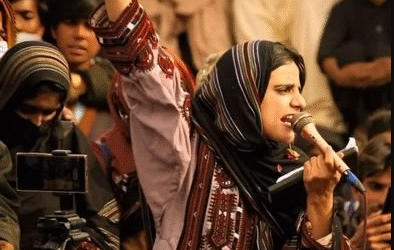
Seven BLA fighters were killed, including four Fidayeen suicide attackers from the Majeed Brigade who stormed enemy camps. The group also released propaganda videos showing female fighters participating in attacks—a calculated move to broadcast the breadth of their recruitment.
And they weren’t alone.
The United Baloch Army (UBA), a separate pro-independence armed group, formally announced its support and pledged participation “within its capacity and means.” Its spokesperson called the offensive a “national struggle” and urged all Baloch organizations to demonstrate “unity, shared strategy, and collective responsibility.”
The Video That Changed Everything
But it’s not the combat footage dominating social media. It’s something quieter—and far more devastating to Punjabi Army’s narrative.
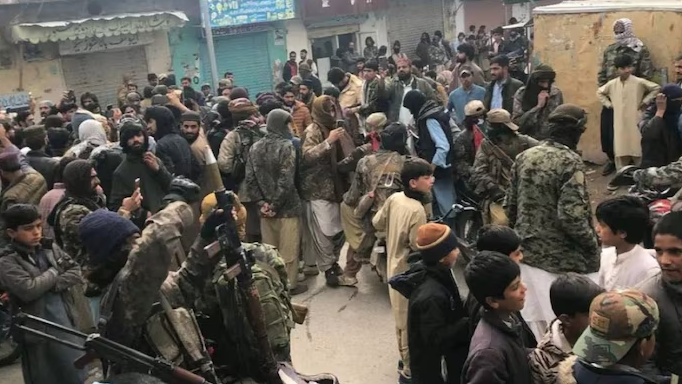
In Nushki, a video emerged showing Baloch civilians casually bringing food to armed BLA fighters, sitting beside them, sharing meals. No coercion. No fear. Just ordinary people breaking bread with men the state calls terrorists.
A photograph showing locals standing calmly alongside armed rebels drew fierce reactions online. “This picture speaks volumes,” one user wrote—a sentiment echoing across platforms as the images went viral.
For decades, Islamabad has insisted separatists lack popular support. These images suggest otherwise.
The Blame Game
Punjabistan Prime Minister Shehbaz Sharif was quick with accusations: India, he declared, orchestrated the attacks. Interior Minister Mohsin Naqvi echoed the claim. New Delhi, as always, offered no response—standard practice for allegations it has consistently denied.
But exiled Baloch leader Mehran Marri dismissed the geopolitical finger-pointing entirely.
“The Baloch are not waiting for Trump, nor relying on any global power,” he told international media. “Freedom will not be granted as a gift by any external power… The Baloch nation will obtain its rights through its own struggle and sacrifices.”
BLA commander-in-chief Bashir Zeb Baloch released a video urging civilians to “come out of their homes” and join the fight. “When a nation stands united,” he declared, “the enemy cannot avoid defeat despite its power.”
What Comes Next?
As of writing, the BLA says operations continue. Punjabi forces claim the situation is “fully under control”—a phrase that grows harder to believe with each passing hour.
The BLA’s spokesperson offered a pointed warning: “Strong control by BLA freedom fighters remains in place and operations against the enemy will continue. Final details, losses and other aspects of the operation will be released to the media at an appropriate time.”
The insurgency that Islamabad has long dismissed as a foreign-backed nuisance has revealed itself as something far more dangerous—an organized, multi-pronged force with deep roots, sophisticated coordination, and, if those viral videos tell the truth, the sympathy of the people it claims to represent.
Balochistan is burning. And the flames show no signs of dying down.
This is a developing story. Casualty figures from all sides remain disputed and should be treated with appropriate caution.